
What a bid bond guarantees, and what it costs you
A bid bond usually costs nothing at bid time and can still cost you a contract. What it guarantees, the 5%, 10% and 20% rules owners set, and why 47% of contractors have missed a deadline waiting on one.
Updated November 9, 2026
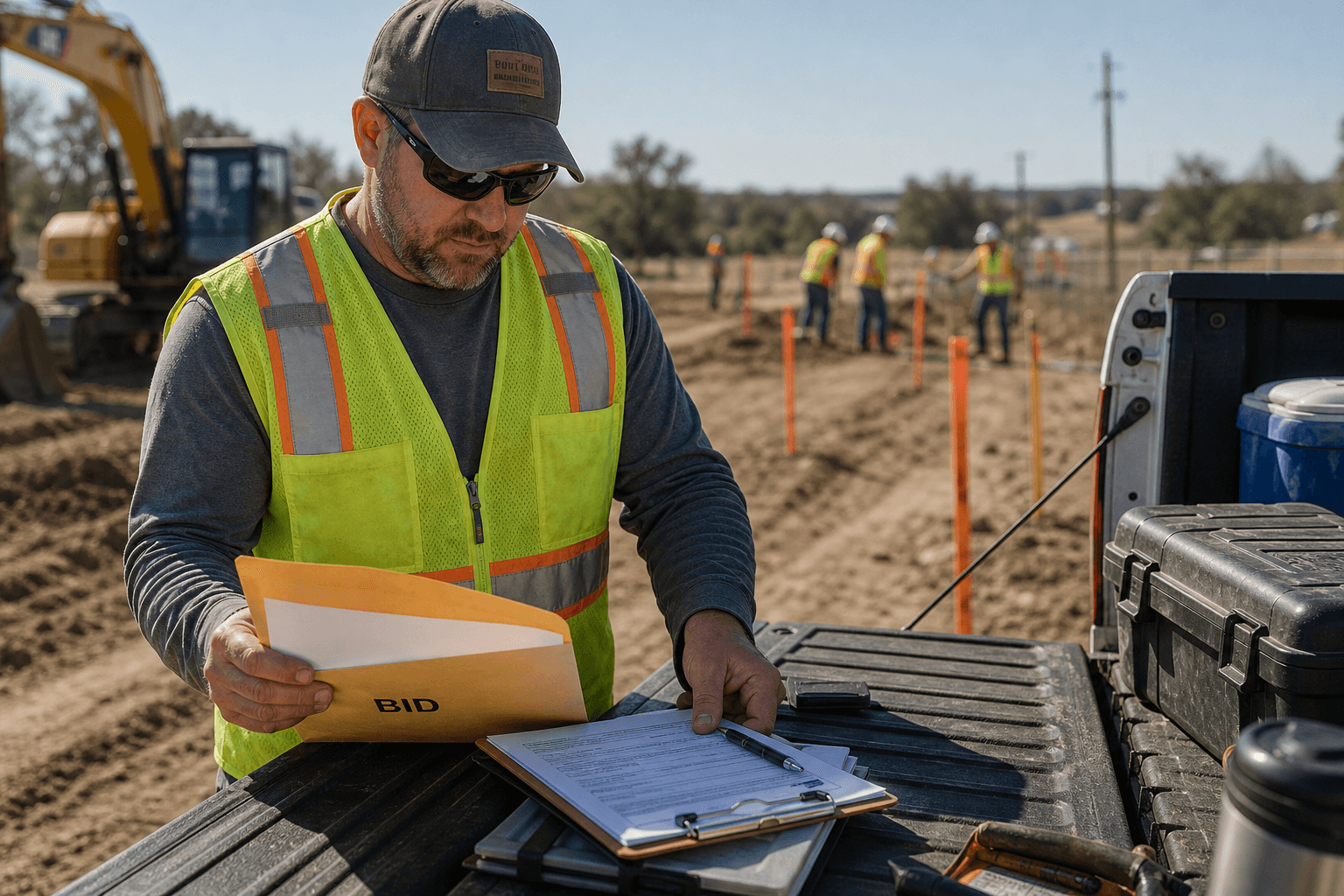
A bid bond is the cheapest document in a bid package and the one most likely to end your run on a technicality. It backs your promise to sign the contract and furnish the required payment and performance bonds if your bid is accepted. In most cases the surety charges no separate premium at bid time. The exposure is not the premium. It is the calendar.
What a bid bond guarantees
The bond runs to the project owner. It exists to cover the cost of the do-over if the low bidder walks away.
The Small Business Administration defines a bid bond as a bond conditioned on the bidder entering the contract and furnishing the required payment and performance bonds (13 CFR 115.10). Note who the definition protects: the owner, not the contractor holding the bond.
What can the owner collect? Merchants Bonding, which writes contract bonds, says the owner is generally owed the lesser of the bond amount or the difference between the low bid and the second-lowest bid, assuming the claim is valid, and that the surety investigates before it pays (Merchants Bonding). Two things follow. A bid spread of a few thousand dollars caps the loss on a small job. And no surety pays on demand; it verifies the award and the refusal to execute first.
How much is a bid bond? 5%, 10% or 20%, depending on the owner
There is no national bid bond percentage. The owner sets it, and these three reference points cover most of what contractors see.
Federal work: at least 20 percent, capped at $3 million
For federal solicitations the contracting officer sets the guarantee in the clause at 52.228-1, and FAR 28.101-2 states the amount shall be at least 20 percent of the bid price but shall not exceed $3 million. The same section lets the officer set a return period other than 10 days for executed bonds and require a separate bid bond for construction (FAR 28.101-2).
Accepted forms are wider than a bond: a bid bond from an acceptable surety, a postal money order, a certified check, a cashier's check, an irrevocable letter of credit, or certain Treasury bonds and notes. Failing to furnish the guarantee in the proper form and amount by bid opening may be cause for rejection of the bid (FAR 52.228-1).
California: 10 percent on Caltrans work
Caltrans requires bidder's security equal to at least 10 percent of the bid. Cash, a cashier's or certified check, a signed bidder's bond from an admitted surety insurer, or an electronic bidder's bond through a Department-approved registry all satisfy it. Paper goes to the Office of Construction Contract Awards before bid opening; the electronic bond goes with the electronic bid (Caltrans Standard Specifications 2-1.34).
South Dakota: 5 percent check or 10 percent bond
South Dakota requires a certified or cashier's check for 5 percent of the bid on public improvement work, and in lieu of the check a bid bond for 10 percent of the amount of the bid, from a surety authorized to do business in the state (SDCL 5-18B-2). The bond amount is higher than the check because the surety is taking the risk instead of your bank balance.
Across the market, bid bond penal sums typically run 5 to 20 percent of the bid, against 100 percent of the contract price for the performance and payment bonds that follow an award (CSBA).
Does a bid bond cost anything?
Usually no. In most cases bid bonds are not charged a separate premium; the surety collects a premium later, when the performance and payment bonds are issued after award (CSBA). That matters for a different reason. The bid bond is free at bid time and the real cost arrives at award, so a contractor who has not priced its performance and payment bond rate before bidding is bidding blind. Ask your agent for the rate on a project of that size before you submit, not after you win.
What happens if you win the bid and don't sign
Under FAR 52.228-1, if the winning bidder fails to execute all contractual documents or furnish executed bonds within 10 days after receipt of the forms, the contracting officer may terminate the contract for default, and the bidder is liable for the cost of acquiring the work above its bid, offset by the guarantee (FAR 52.228-1). On a bid bond the surety pays up to the penal sum. On a certified check or a cash guarantee, the owner keeps the money.
Ten days is not much. It runs from receipt of the forms, and it assumes your performance and payment bonds are approved, not merely requested.
Bid bond requirements when bonding capacity is thin
If a surety declines your bid bond, the federal route is the SBA's surety bond guarantee. SBA guarantees bid, performance and payment bonds issued by certain surety companies, which lets those companies bond small businesses that might not meet the criteria other sureties apply. The path: the small business contacts an SBA-authorized surety agency, the agent secures approval from the surety partner, and SBA guarantees the bond (SBA, Surety bonds). SBA guarantees contract bonds, not commercial ones.
Two limits matter. The applicable statutory limit on a contract SBA may guarantee is $9 million, or $14 million if a federal contracting officer certifies the larger guarantee is necessary (13 CFR 115.10). A bid bond guarantee expires 120 days after execution of the bid bond unless the surety notifies SBA in writing before the 120th day that a later expiration date is required (13 CFR 115.12). Long award timelines are the reason that clause exists.
When a federal letting requires a bond from an acceptable surety, check the Treasury list. The Bureau of the Fiscal Service's Circular 570 lists the companies holding certificates of authority as acceptable sureties on federal bonds under 31 CFR 223.16. A company's published underwriting limitation applies per bond, though it may write above that limit when the excess is protected by reinsurance or coinsurance (Circular 570).
How to be bid-ready before the letting
The bond is the last step. These are the ones before it.
Confirm the owner's requirement before you price the job. Federal, state and local owners use different percentages, and an electronic letting may rule out the paper guarantee you planned to use.
Set up electronic bonding before you need it. TxDOT takes electronic bid bonds only on electronic bids: paper bid bonds and checks cannot be used as bid guaranties there, initial setup of the electronic bonding process can take as much as a week, and the clearinghouses charge a fee for the service (TxDOT, Electronic Bidding System).
Get your performance and payment bond approval moving while the bid is still open, so the 10-day window after award covers execution rather than underwriting.
Keep your financial packet current. Your contractor license bond, financial statements and work-in-progress schedule are what a surety reads when it looks at capacity.
The numbers say timing is the real problem. NNA Surety's 2026 Contractor Bond Buyer Survey found 47 percent of contractors have missed a bid deadline because of slow bond turnaround, and 30 percent reported difficulty qualifying for the bonding support they need. More than three quarters of respondents bid on at least three projects a month (BusinessWire, November 3, 2026). Losing one letting out of three or four a month is not an administrative inconvenience. It is backlog.
Treat the bid bond as the first item on the bid calendar, not the last document in the envelope. Percentages you can look up. A missed deadline you cannot.
Sources
#bid bond#surety bond#federal construction bonds#Caltrans bidder's security#SBA surety bond guarantee#bid deadline
Related posts
Surety bond cost calculator: what it can't price
A surety bond cost calculator cannot price your bond: the amount is fixed by statute or contract, and the premium is a rate the surety files and applies after underwriting. Here is what the search spike does and does not tell contractors.

Bonding capacity: what sets your limit and how to raise it
A bonding program is an aggregate limit, and every job also faces a single-job ceiling. Here is what a surety reads before it writes either number, and what moves them.

Pennsylvania contractor license search: two state systems
There is no single Pennsylvania contractor license search. The Attorney General's HICPA registry and the Department of State's PALS answer different questions, and neither one is a bond requirement.